
Additive Analyses
Food additives are the general name given to substances that are not consumed as food alone, that have nutritive value or not, that are added to food for technological purposes such as protection and stabilization at stages such as production and processing, that directly or indirectly become a component of that food. Many food additives are available in nature, and some are even essential nutrients. It is for technical reasons that they are classified as food additives and have an "E number". These substances, which are allowed to be used in foods in the light of data obtained through long scientific studies, provide many benefits such as protecting foods from microbes that endanger human health, improving their structure and taste.
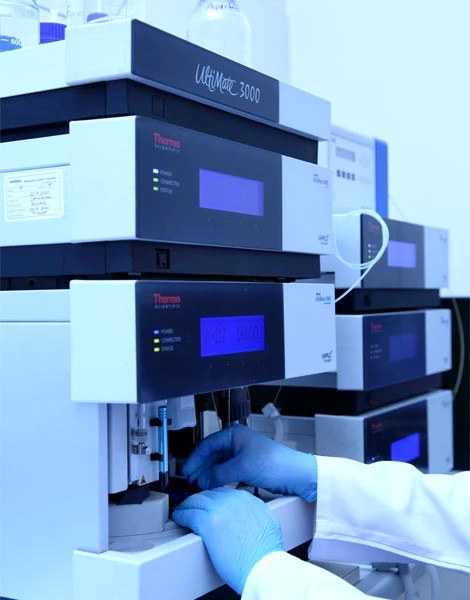
Food additives can be grouped into four main groups according to their intended use. These groups are as follows:
- Additives that extend shelf life
- Additives that alter sensory properties
- Additives that regulate nutritional value
- Processing Aids
Some food additives are as follows:
- Protectors
- Sweeteners
- Colorants
- Acidity regulators
- Emulsifiers
It is allowed to be used within certain limits, taking into account its compliance with the criteria of the Turkish Food Codex Regulation on Food Additives.
Frequently Asked Questions
-
What is Additive Analysis?
Additive analysis is a laboratory test used to detect colorants, sweeteners, preservatives, and other additives in food, beverages, and some industrial products. Its purpose is to ensure products comply with legal limits and are safe for consumption.
-
Why are Additive Tests Important?
Additive tests guarantee that products do not contain harmful substances. They also ensure compliance with legal regulations and international standards, safeguarding consumer safety and product quality.
-
Which Products Require Additive Analysis?
Food and beverages, energy drinks, confectionery, sauces, and processed foods are commonly analyzed. The test scope and methods may vary depending on the product type.
-
What Do Colorant Tests Include?
Colorant tests identify the type and quantity of natural and artificial colorants in products. Detecting excessive or prohibited colorants may prevent the product from being marketed.
-
Why are Sweetener Tests Conducted?
Sweetener tests measure the type and amount of sugar, aspartame, sucralose, and other sweeteners. These tests are critical for both health and regulatory compliance.
-
How Are Preservatives Tested?
Preservatives extend the shelf life of products. Analyses check whether they are within permitted limits and detect any prohibited substances.
-
Which Standards Govern Additive Analysis?
Analyses are typically conducted according to ISO 17025, Codex Alimentarius, and national food regulations. Compliance ensures product safety and international marketability.
-
Who Should Conduct Additive Tests?
Tests should be carried out by accredited laboratories. Reports from accredited labs are officially recognized and accepted in CE marking and export procedures.
-
How Long Does Additive Analysis Take?
The duration depends on the type of additive and the number of samples. Simple chemical tests may take a few days, while comprehensive analyses can take 1–2 weeks.
-
How Are Additive Analysis Prices Determined?
Prices vary based on test type, number of samples, and applicable standards. Complex or multi-additive tests can be costly but are valuable for product safety and regulatory compliance.
-
Is Additive Analysis Mandatory for Imported Products?
Yes, imported food and beverages must be tested for additives. Customs authorities may require laboratory reports to ensure regulatory compliance.
-
Which Methods Are Used in Additive Analysis?
Modern analytical techniques like HPLC, GC-MS, LC-MS/MS, and spectrophotometry are used. The method depends on the additive type and sample.
-
Why Are Additive Tests Important for Human Health?
Excessive or prohibited additives can harm health. Additive analysis ensures products are safe and protects consumer health.
-
How Is a Laboratory Accredited for Additive Analysis?
An accredited laboratory has the authority to perform tests according to ISO/IEC 17025. Accredited reports are officially valid and accepted in CE marking and export procedures.
-
How Are Additive Analysis Results Interpreted?
Results report the type, quantity, and compliance of tested additives. Expert interpretation determines product safety and regulatory conformity.
Get in touch now
Contact our expert team for your R&D studies and testing needs, let's bring your projects to life together.