
Food Contact Substance and Material Analyses
Migration tests are the analyses that are carried out on packaging, kitchen equipment and food production machines that come into contact with food, and that determine the risk of migration of substances that pose a toxicological risk to food.
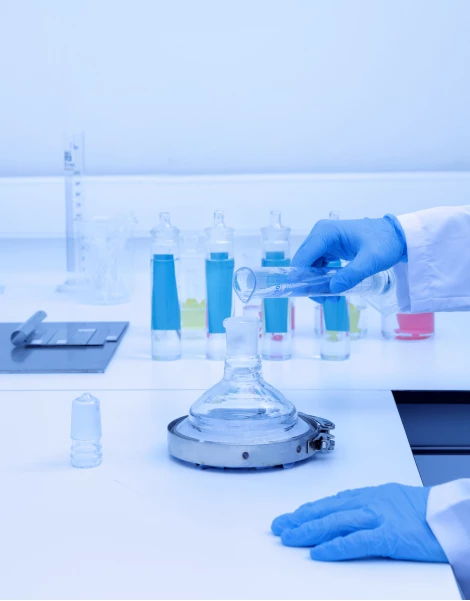
Factors affecting migration analysis are as follows:
- Structure of food
- Contact time
- Contact temperature
- The structure of the package and the amount of substance used in its content
Total migration is expressed as the sum of all substances that can migrate from food contact materials to food.
Published by the Ministry of Agriculture and Forestry; Test procedures are carried out on packaging materials within the scope of the “Turkish Food Codex Communiqué on the List of Food-Like Used in the Migration Test of Components of Plastic Substances and Materials in Contact with Food”.
The food simulations used in migration analysis are as follows;
Food-like A: Juicy Food, 10% Ethyl Alcohol
Food-like B: Acid Food, 3% Acetic Acid
Food-like C: Alcoholic Food, 20% Ethyl Alcohol
Food-like D1: Fatty Food, 50% Ethyl Alcohol
Food-like D2: Fatty Food, Vegetable Oil
Food-like E: Dry Food, Poly (2,6-diphenyl-p-phenylene oxide)
Total Migration Analysis Migration Dry Foods Modified Polyphenylene oxide (MPPO)
Total Migration Analysis Full Immersion (Aqueous Foods-Aqueous, Acidic, Alcoholic)
Total Migration Analysis Product Control (Aqueous Foods-Water, Acidic, Alcoholic)
Total Migration Analysis Substitution Test Method (Oily-95% Ethanol and Isooctane)
Specific migration test; It is tested in various food packages such as plastic cups, water bottles, feeding bottles, inner surface of cans.
During testing, food simulations are assigned to simulate migration to see if migration limits are appropriate. A comparative evaluation is made to determine the transition boundaries. In order to obtain accurate results, there are processes such as testing time, temperature and preparing a test environment that will represent the worst possible environmental conditions of plastic materials or articles. The test is carried out by creating standard test conditions in a suitable environment that includes all these processes.
Determining the type of plastic packaging materials in contact with Foodstuffs and the additives used is especially important for the protection of consumers.
Food is in contact with the packaging until it reaches the consumer's hand. For this reason, it has become important to determine the quality of the packaging material to protect the food from environmental factors and microorganisms and whether there is any harmful chemical in the structure of the packaging.
Analyses made within the scope of specific migration tests:
- Bisphenol A ([2,2-bis(4-hydroxyphenyl) propane)
- Heavy Metal Determination (Lead, Cadmium, Mercury, Arsenic, Aluminium, Copper, Barium, Zinc, Iron, Cobalt, Lithium, Manganese, Nickel)
Determination of Structure Analysis in Packages
It is carried out with the FT-IR Spectroscopy device to determine the type of material and additives used in food packaging. The FT-IR spectroscopy device used for the detection of organic compounds is the most suitable method for plastic products used in the packaging industry. With the FTIR spectroscopy device, qualitative and quantitative material determination can be made on the packaging material. FTIR spectroscopy device is infrared vibration spectroscopy. With the analysis made, fundamental vibration, stress-spin modes in the electromagnetic spectrum allow us to have information about the chemical profiles of molecules.
Frequently Asked Questions
-
What is Food Contact Material Analysis?
This analysis determines whether packaging, containers, kitchen utensils, and other materials are safe for contact with food. Chemical migration, toxic substances, and hygiene standards are evaluated.
-
Why is this Analysis Important?
Harmful chemicals in materials that contact food can threaten food safety and consumer health. Tests ensure regulatory compliance and product safety.
-
Which Products are Tested?
Plastic packaging, metal containers, glass, ceramics, cardboard boxes, single-use containers, and kitchen utensils fall under this analysis.
-
Which Standards are Used for FCM Testing?
Tests follow EU 10/2011, FDA, and ISO 17025 standards, ensuring materials are safe for food contact.
-
What is Chemical Migration Testing?
Chemical migration tests measure the amount of potentially harmful substances transferring from material to food, critical for plastics and coatings.
-
Why are Heavy Metal Tests Conducted?
Heavy metals such as lead, cadmium, and arsenic in containers and packaging can migrate to food, posing health risks. Tests guarantee safety.
-
What Parameters are Tested in Plastic Materials?
Phthalates, bisphenol A (BPA), heavy metals, and other toxic components are analyzed. Tests ensure compliance with legal limits and safe usage.
-
What is Measured in Ceramic and Glass Materials?
Lead and cadmium migration, surface coatings, and durability tests are performed to confirm suitability for food contact.
-
Why are These Tests Important for Human Health?
Non-compliant materials may release toxic chemicals into food. Analyses protect consumer health and ensure safe product usage.
-
Are Tests Mandatory for Imported Products?
Yes, imported packaging and contact materials require testing for regulatory compliance. Accredited lab reports are officially recognized.
-
How is Laboratory Testing Conducted?
Samples are prepared and subjected to chemical migration and heavy metal tests under simulated conditions. Results are reported and compared with legal standards.
-
How Long Do Tests Take?
Simple tests take 2–3 days, while comprehensive chemical migration and heavy metal analyses may require 1–2 weeks, depending on material and scope.
-
How are Analysis Prices Determined?
Costs depend on sample number, material type, and test scope. Comprehensive testing is more expensive but critical for product safety.
-
How are Test Results Interpreted?
Reports indicate the amount of chemicals migrating into food and compare with legal limits. Expert evaluation determines safety and compliance.
-
Advantages of Testing in Accredited Laboratories
ISO/IEC 17025-accredited tests are reliable and legally recognized. Products are ready for CE, FDA, or export certification.
Get in touch now
Contact our expert team for your R&D studies and testing needs, let's bring your projects to life together.