
Water Analyses
Water, which plays an important role in the processing, preparation and production of all foods, has a fundamental role in ensuring food safety. Microbiological and chemical analyses of water should be carried out periodically and its compliance with legal regulations should be evaluated.
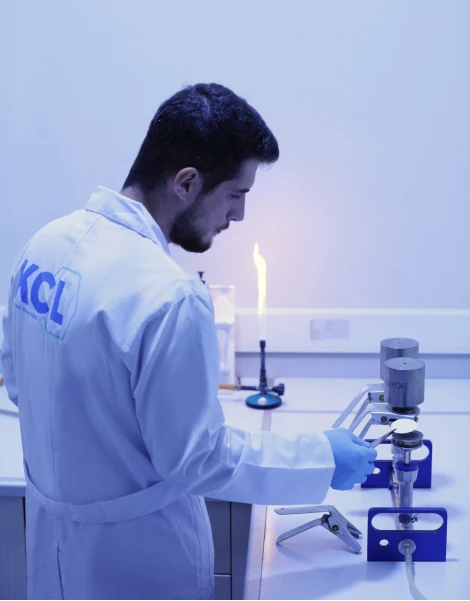
The water contained in the food and used in the food process should not contain toxic residues such as heavy metals and pesticides, and should comply with bacteria-laden legislation.
Kazlıçeşme Laboratories provides solutions for your needs with its expert staff and experience in determining water quality.
Water Analyses Deney Tablosu
Lead (Pb), Cadmium (Cd) Analysis AAS Method
In-house Method - AY-KL-042 (modified from EPA Method 1637)
1000 mL
Iron (Fe) Analysis, AAS Method
In-house Method - AY-KL-074 (modified from EPA Method 1637)
1000 mL
Escherichia coli (E. coli) and coliform bacteria count (membrane filtration technique)
TS EN ISO 9308-1
1000 mL
Detection of Faecal Enterococci (membrane filtration technique)
TS EN ISO 7899-2
1000 mL
Colony Count at 22C and 36C
TS EN ISO 6222
1000 mL
Hardness
SM 2340
1000 mL
Free Chlorine
SM 4500
1000 mL
Electrical Conductivity
TS 9748
1000 mL
pH
TS 10523
1000 mL
Determination of Nitrate
SM 4500 B
1000 mL
Determination of Nitrite Amount
SM 4500 NO2–B
1000 mL
Determination of Ammonium Amount
TS 7159
1000 mL
Determination of Arsenic (Ace)
In-house Method AY-KL-073 (SM 3114 B)
1000 mL
Determination of Mercury (Hg)
In-house Method AY-KL-079 (SM 3112 B)
1000 mL
Blur
TS 5091 EN ISO 7027
1000 mL
Taste, Smell (organoleptic)
SM 2170 B
1000 mL
Colour
SM 2120 B
1000 mL
Permanganate Index (Determination of oxidizability)
SM 4500-SO42- E
1000 mL
Permanganate Index (Determination of oxidizability)
TS 688 EN ISO 8467
1000 mL
Frequently Asked Questions
-
What is Drinking Water Analysis?
Drinking water analysis measures microbial, chemical, and physical properties in tap and bottled water to confirm safety, cleanliness, and suitability for human consumption.
-
Why is Water Analysis Important?
Water quality directly affects health. Analyses detect pollutants, heavy metals, and microorganisms, ensuring safe consumption and regulatory compliance.
-
Which Parameters are Tested?
pH, chlorine, hardness, heavy metals (lead, arsenic), nitrate, bacteria, and total coliforms. These parameters verify water safety and potability.
-
What is Microbiological Analysis in Drinking Water?
Microbiological analysis detects bacteria and viruses in water. E. coli and total coliform testing are the most common methods.
-
What Do Chemical Tests Include?
Heavy metals, nitrate, nitrite, phosphate, ammonium, and other contaminants. These tests prevent long-term health risks.
-
Why Measure Physical Parameters?
Color, odor, turbidity, and conductivity assess visual and taste quality and indicate filtration and treatment effectiveness.
-
How is Drinking Water Tested?
Samples are collected, and microbial, chemical, and physical tests are conducted in a laboratory. Results are reported and compared to legal limits.
-
How Long Does Water Testing Take?
Simple physical and chemical tests take 1–2 days; comprehensive microbiological tests may take 3–5 days, depending on sample and test number.
-
Why Are Heavy Metal Tests Important for Drinking Water?
Lead, arsenic, and cadmium pose serious health risks if consumed over time. Testing guarantees water safety.
-
How Are Analysis Prices Determined?
Costs vary by sample number, test type, and scope. Comprehensive testing may be more expensive but is critical for health and compliance.
-
Are Tests Mandatory for Imported or Bottled Water?
Yes, imported and bottled water must be tested to ensure safety and compliance. Accredited lab reports have official validity.
-
How Are Test Results Interpreted?
Reports compare all parameters with legal limits. Expert evaluation determines water potability, safety, and compliance.
-
Are Household and Municipal Water Analyses Different?
Yes, municipal water undergoes regular treatment, while household water comes from natural sources. Parameters may be similar, but risk and testing scope differ.
-
Why Are Water Analyses Critical for Health?
Contaminated water can cause diseases and toxic effects. Regular analysis ensures safe, clean, and healthy drinking water.
Get in touch now
Contact our expert team for your R&D studies and testing needs, let's bring your projects to life together.